What's everyone working on? 2026 edition ⌨ 🪛

It’s been a while since we’ve had one of these, so let’s bring it back. Summer is right around the corner and we all want to hear what everyone’s up to with their home labs, home networks, servers, or whatever you’ve got going on.

New hardware? Migrating to a different hypervisor? Finally getting around to that backup strategy you’ve been putting off? Maybe you just upgraded your router or set up a new NAS.

Whatever it is, or was, share it here.

And if you’re looking for inspiration or past discussions, check out these threads:


If you’re looking for inspiration or past discussions, here are some threads worth checking out:

Home lab & hardware

Networking & firewalls

Self-hosted AI

Previous “What’s everyone working on” editions

image

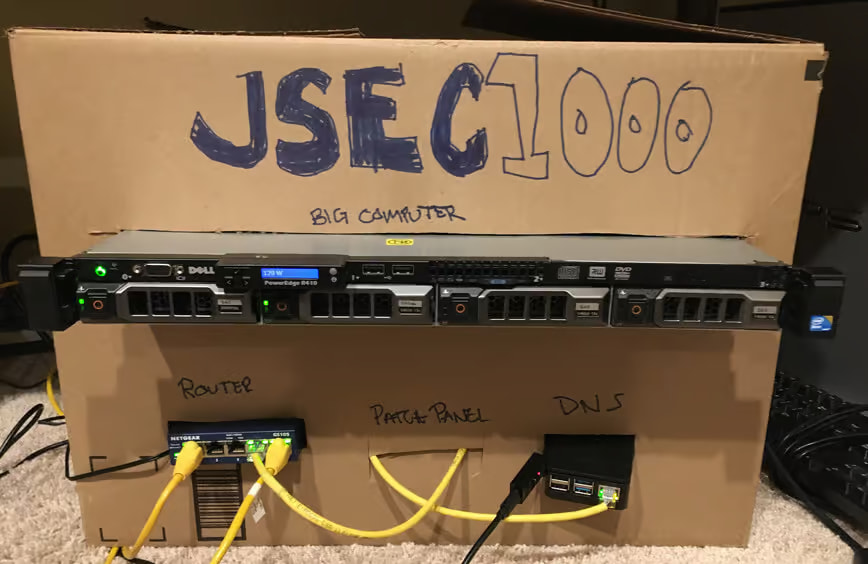
It doesn’t matter if it’s a full rack or a single Raspberry Pi in a closet. It’s always, cool to see what people are running and what problems they’re solving!

2 Likes

I’m trying to figure out how to modify /etc/pam.d/ files so that it will accept a password of just 12345 Right now, it asks for at least 10 chars with upper,lower,control chars. Reading a lot but no luck yet. (this is a router within my network)

4 Likes

I’m writing and testing a very small “multiprocessing & IPC framework” for bash (in bash).
(nothing special, just some plumbing and syntactic sugar)

It eases the creation of IPC abled processes.

It does this by creating the plumbing , launching your bash-code, connects the launched processes to the plumbing and makes them wait for input by an eventloop.

What you send to the processes can be bash functioncalls, commands or whatever a shell accepts. The process waits in an event-loop

Strangely enough, it ticks all the boxes (rules) that an OOP language should meet to be called OOP, which actually took me by surprise.

So in short, I created a few ‘commands’:

New - which creates a process
@ - which sends a command-message to a process
Terminate - which ends the herd of processes and cleans up the remains

There are three more commands which we skip for the moment.

for instance, if I want to create a process called ‘peter’ based on a script called ‘idiot’ and send it the command to echo ‘hello world’ I would put in my source:

New peter idiot
@ peter "echo hello world"

to kill peter I would write
@ peter 'exit'

to let peter kill me and all the rest of the processes and then cleanup the mess, I would just write:
@ peter 'Terminate'

Let’s say I write a calculatorscript and want it to do a calculation and calls me back with the answer by using my callback function from_calculator() , I can write:

@ calculator "answer=\$(calc 3+4) ; @ $SELF 'from_calculator \$answer'"

or, even shorter:

@ calculator "@ $SELF 'from_calculator \$(calc 3+4)'"

Anyway, It works like a charm and I won’t bore you to death with more examples now.
If you want to know more about it or if you want to have the 30 or 40 lines of bashsource and some examplecode to experiment yourself, let me know ok ? Because then I’ll post it here (or in a new thread or something, with a mini-tutorial)

EDIT: forgot to mention, it has an internal debugger

5 Likes

My pet project is a programming language. Long story short, I try to imagine what C could be if it had modular structure and Algol-like syntax like Modula, Oberon, etc. Now I’m prototyping scanner and parser in Python. The more or less achievable target would be source to source compiler. Into C, of course.

4 Likes

@ugnvs I want to know more !! :heart_eyes:

4 Likes

Yup! Way over my head. Also would love to know more, explained in simple form. :slightly_smiling_face:

2 Likes

It would seem that you need to specify a line such as

  • minlen=5

in the following (for ubuntu):

  • /etc/pam.d/common-password

Can’t remember where I saw it, but there might be a hardcoded overide with minimum 6.

4 Likes

@ericmarceau Thanks to your answer I could track it down Eric. :+1: Perfect !

@pavlos Try /etc/security/pwquality.conf :slight_smile:

# Minimum acceptable size for the new password (plus one if
# credits are not disabled which is the default). (See pam_cracklib manual.)
# Cannot be set to lower value than 6.
# minlen = 8

The settings moved from one file to the other over time.

EDIT: see man 8 pam_pwquality

2 Likes

@tkn @hydn I am a bit confused of what to tell without writing too many too long and too tedious posts. I just try to outline a couple of core ideas for the mentioned project.

  • Explicit interface specification vs textual inclusion. Examples are structured Modula-2, Oberon-*, Python sources with explicit export-import vs catenation/insertion of source files with (possible) implicit mutual overloading of definitions.
  • Strong type control and explicit type conversion. Simple unambiguous syntax.
  • So called ‘low level’ features including interaction with underlying OS are native part of a language as in C vs ‘academical purism’ which tries to ignore these features as much as possible and regards them as insignificant ‘implementation detail’.
3 Likes

@tkn @ericmarceau @hydn

The router does not have a /etc/security/ dir, it uses an overlayfs which I have no idea. I’ll leave the router as is (GL.iNET SFT1200) and keep the 10 char pw.

3 Likes

The only computer related thing that I have to do is replace the battery in an old MacBook Air 6,2.

4 Likes

For me I’ve been wanting to disconnect from the cloud for the past 2 years. Google Drive and iCloud.

Right now I’m thinking of going with image Immich or Photoprism but also need NAS for files.

3 Likes

Currently I’m working on a personal javascript library for managing dates input.

Next month I’ll start new project for a musical group, it will be a sorta of raffle with some random questions and prizes for the winners ~ just for getting young peoples stay in touch with music :slight_smile:

3 Likes

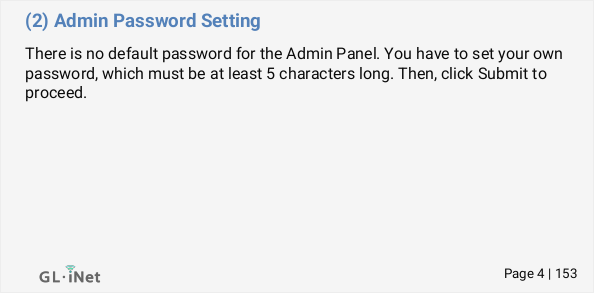
According to their manual …


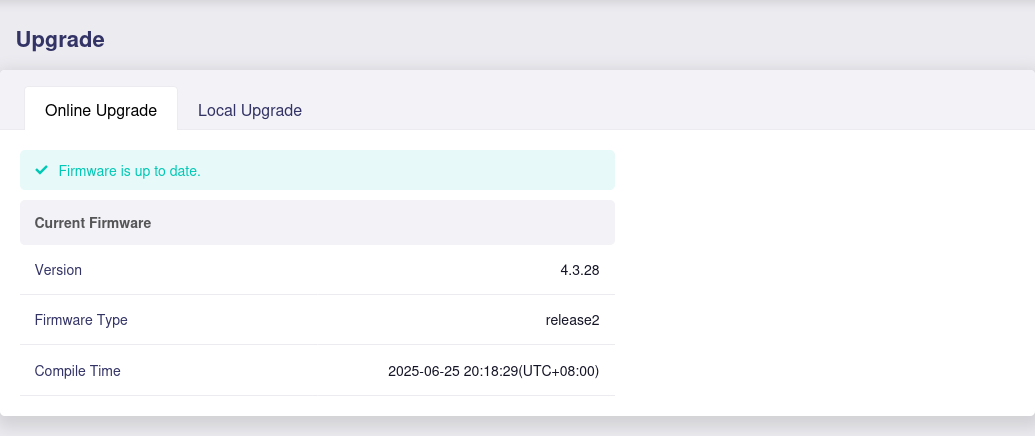
Maybe an updated firmware?

Google says that the v3.x firmware allowed 5-character, but v4.x increased the requirement to 10-character.

:frowning:

3 Likes

Eric, my current firmware is V4.3 hence I have to use 10-char pw.

4 Likes

I really do enjoy GL Inet devices. (Edit: I’m not affiliated with them in any way) I find them to be a great bang for the buck and a breeze to setup client VPN using WireGuard. I still have the first device I got with them.

I got this after attending CES a few years back. Before my home lab this thing ran our home internet for a bit when my wife and I relocated countries.

Then upgraded to the Brume:

and also recommended it to family and friends. The price point again made these hard to beat.

Lastly at some point II used:

Just as good but runs a little hot. The only thing missing on these are more capable firewalls. Things like:

  • Granular stateful rules per interface, direction, schedule, and user
  • Multiple interfaces with independent rule sets (LAN, WAN, DMZ, VLANs, OPT)
  • Aliases, floating rules, and rule ordering control
  • Layer 7 IDS/IPS (deep packet inspection, signature matching)
  • DNSBL and GeoIP filtering
  • HAProxy or Squid for L7 reverse proxy and content filtering. etc

What’s running on your home network right now?

Are you tinkering there also? Or trying to escape your ISP’s garbage equipment? Some of the reasons we navigate away from Windows (or Mac) are also similar to the reasons why we try to replace ISP equipment which our home devices and systems connect to.

1 Like

@hydn

A lot of ISP supplied modems ar indeed trash. I’ve seen horrible cablemodems, running on an intel puma chipset :face_vomiting: and crap out several times a day.

I was lucky that my ISP delivered an above average quality VDSL modem/router.

I was shocked, however, by how crappy the firmware was and I also saw how one could bypass the firewall.

First thing I did was connecting my old Zyxel between their modem and my local net (using it as a firewall/NAT) and I contacted my ISP. It seemed that they took it very seriously.

Within a month after I contacted my ISP about this, they pushed new firmware and lo and behold, It was shockingly good (for an ISP modem). It was completely different, it was bloody fast, solid, no way to bypass the firewall and had the necessary useful options in a logically sound interface.

I must say that I was positively surprised or rather shooketh. I never expected that level of improvement :zany_face:.

EDIT: removed the Zyxel afterwards ofcourse

3 Likes

I guess I too was lucky. My history with my ISP (Rogers, Canada) has been rather fortunate. All my routers have been solid while I had each in turn:

  • Hitron - CGNM-3552-ROG Router
  • Hitron - CGN2-ROG
  • Hitron - CGN3 ROG (current)

BTW, anyone wanting to look up routers, this is a good resource:

3 Likes

My Linux workstation connects via HDMI to the AVP (Audio Video Processor).

The AVP sends the video via HDMI to the HDTV/monitor.

The AVP sends the seven audio channels to external amplifiers which feed seven bookshelf speakers.

The AVP splits the two bass channels in a left/right configuration to four powered subwoofers.

I spent the last month replacing the plate amps in the four subwoofers. The original plate amps had bulging/leaking capacitors.

3 Likes