Hi, I’m posting as V, the project behind Vellivex. We’re developing VGuard, VVault, VRelay and V Cipher, and are looking for constructive testing and code review.
VVault is a browser-based passphrase message-encryption tool; VRelay validates and copies/saves/shares ciphertext packages. V Cipher is a separate experimental two-phone QR workflow, and VGuard is an Android local-VPN app for selected-app packet blocking.
These are early, unaudited tools. Please use synthetic test data only, not sensitive information. V Cipher’s physical two-phone scanning workflow and VGuard’s live Android enforcement remain unverified. There is no forward-secrecy claim. VRelay is not a hosted message-delivery service.
We would welcome reproducible bug reports, usability feedback and scrutiny of the threat model and implementation. Please report security issues privately through the website or the repository security policy. What would you want verified before considering a test?
Regardless, I appreciate that you’re upfront about it being unaudited and early, that’s more honesty than most security projects show at this stage.
2 quick questions while I poke around the repo.
1 - Is there a reason it lives under the Fablescateringandevents account rather than a dedicated Vellivex org?
2 - And for VGuard, any plans for reproducible builds or getting it onto F-Droid? I think a lot of folks here would be more comfortable testing an APK they can build and verify themselves vs grabbing it from the site.
Either way, welcome aboard and looking forward to seeing where this goes.
Also, for transparency, would you mind telling us a bit about the person or people behind Vellivex? Just some background, like whether it’s a solo project, what you’ve worked on before, and why the repo lives under the brand new Fablescateringandevents account.
With security tools especially, that kind of context goes a long way toward helping folks here feel comfortable testing.
Thanks Hayden, John and Halano—appreciate the welcome, the questions and the first star!
The GitHub account: fair point. The repository was initially created under my existing Fables account. I’ve now moved it into a dedicated Vellivex organisation, preserving its history:
The repository is now v-security-suite under the Vellivex organisation on GitHub.
Who’s behind it: this is a solo project that I’m mainly building for myself, driven by concerns about government overreach, surveillance and personal privacy. I wanted more control over my own devices and communications, and decided to publish the source so others can inspect it, question it and help improve it. It’s still experimental, and I’m not presenting myself as an established cryptographer or security research team.
Rootless operation: VGuard is designed to work without root, using Android’s local VPN interface rather than a remote VPN server. It occupies Android’s VPN slot, so it can conflict with another VPN. Its intended design and verified device behaviour are separate things; we’re still gathering real-device evidence.
Reproducible builds and F-Droid: agreed that people should be able to build and verify what they install. We publish the source and build notes, but haven’t established independently reproducible APK builds or obtained F-Droid acceptance. Those are gaps to address, not claims we can make yet.
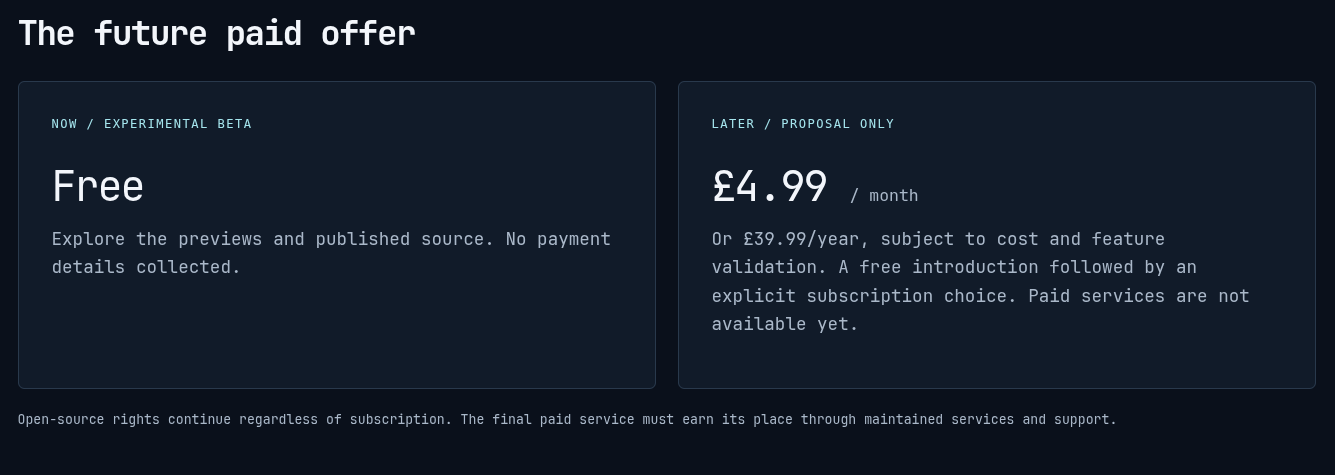
Early-tester access: thanks for the suggestion. The beta is currently free, and the published code is GPL-3.0-or-later. I haven’t committed to a lifetime offer for any future paid services, so I don’t want to promise one prematurely.
I’ve also added focused test tasks and browser walkthroughs:
See “Start testing” on the website linked in the original post.
Please use fictional data only. Reproducible failures, awkward workflows and criticism of the design are all welcome—that’s exactly what the project needs at this stage.
Thanks Brian, really appreciate the warm welcome and good wishes! Glad to be here, and grateful for the thoughtful feedback the community has already given me.
Keep it up; that’s the way to contribute; believe it or not we can ALL help one another in something. For instance, I don’t have much knowledge in your areas of experience with the V series products - what they do, what and how they differ from similar technology, and more.
Thanks Brian! A plain-English overview would help, so here’s what the original four are for:
VVault: encrypt a text message locally in the browser with a passphrase, then unlock the resulting package with the same passphrase. There is no account or hosted inbox in that workflow. It doesn’t authenticate the sender, recover a forgotten passphrase or provide forward secrecy.
VRelay: check the package format, then copy, save or share the encrypted package without entering its passphrase. A valid format doesn’t prove who sent it or make the contents trustworthy. Delivery still happens through a channel you choose.
VGuard: an experimental Android firewall designed to control which apps connect, using Android’s local VPN interface without root or a remote VPN server. It uses Android’s VPN slot, so it can conflict with another VPN. Live blocking still needs real-device verification.
V Cipher: a separate research workflow using two phones and QR frames to move signed, encrypted messages between an offline device and a connected device. The physical two-phone workflow still needs validation.
There is overlap with existing encryption tools and Android firewalls. I haven’t demonstrated a security advantage over established alternatives. What I’m trying to make useful is the separation of these small tasks, inspectable source and clear testing instructions.
For a first look, the VVault/VRelay browser walkthrough on the site’s Start testing page is the easiest place to begin, using made-up text only. Even feedback that a label or step is confusing would help. These remain early, unaudited tools, so please don’t use sensitive information.