Before you watch it and before we continue, I ask you to get into this with a clear mind, like, not reacting to the bad title and not getting into it blindsided by the first impression.
He’s got a point on some things, others may be debatable, but in th end, I think he is right.
I found this video a few days ago, but I’ve been uncomfortable with the direction Ubuntu is taking for a long time. After 17 years on the Ubuntu family, some of them on Ubuntu, most of them on Xubuntu, 4 or 5 years on Ubuntu MATE, I found out I have not been feeling well; wherever the main Ubuntu OS was going, I didn’t like it. And the official flavors were going through hard times to keep up the pace.
Very early this year I switched to Linux Mint, which I loved, but it’s still based on Ubuntu so they’re facing serious trouble because Mint’s development cycle doesn’t match Ubuntu develompent cycle.
In the end, I found my home on Debian, which is what Ubuntu is based on; I could have tried Linux Mint Debian Edition, but for them it’s just a side project.
Check out the video, you don’t even need to watch it, just listen to it while you’re doing something else, then come back here and spit it out.
That doesn’t say 6GB is actually the minimum as I read it, to me that’s a recommendation in order to have a “comfortable experience”.
When the RAM recommendation was changed, there was a blog post published on the reasoning too.
It’ll still run on less than 6GB (eg. 4GB), but you may get a slower experience with extreme workloads, but I’ve not stopped using devices with only 4GB of RAM in my own Quality Assurance testing; as they work fine in my opinion.
Debian is fine if you are proficient, but not if you are new and need help. The forum can be brutal for people seeking help for simple problems. I used Debian and left for that very fact. So knowledge level matters. Debian is not recommended for new or casual user in my opinion.
I generally agree with this video, although there are some inaccuracies that turn this video into more of an opinionated political piece instead of a neutral source of facts.
If I compare it with my findings, I agree with the resource hungry nature of both the chosen desktop and the underlying OS.
Ubuntu has become stunningly obese.
Compare this: UbuntuMate usually eats well over a GB when fresh booted into the desktop, and that is even without snaps. PCLinuxOS Mate is not even using half of that.
The thing about audio is according to my findings incorrect. Audacity plays through pipewire without any problem ( and I completely removed all things snap related).
The licensing of the rust tools is also something that worries me a bit. On the other hand, it saves BSD the trouble to develop their own (which is a good thing, we owe a lot to BSD) and since the OS tools are OS bound it will probably have less impact than suggested.
All in all I agree with the video for about 80% but it also comes over as a bit politically tainted which prevents the video to be classified as a reliable neutral source, and that is really a missed opportunity in my opinion.
b.t.w. @ClaudioDC , thank you for attending me on that youtube channel. It has a LOT of very interesting videos. I probably will watch quite a number of them despite the AI voice and random graphics
Wait the voice is AI? Usually I can tell. That’s a really realistic one. I was hoping we could always tell the soul-less thing that just makes you: “oop, it’s AI generated voice!”
It’s not so much the repetitive speech patterns and intonations but the mispronunciation af acronyms that gave it away for me. I could be wrong though.
Great replies so far, thank you guys for not jumping into it with the intention of destroying what is being said, which is what unfortunately we see everywhere on the internet these days.
Didn’t seem to me like AI voice; if you could hear me speaking, I sound a lot like the guy on the video but who knows these days… the “cover art” for the videos is AI generated, it’s easily noticeable, and I’m sure the titles too; when you make a video, you can paste the whole transcription of it into ChatGPT or Gemini and ask for a title, a description, keywords, cover art, and the AI will deliver.
Indeed it has a lot of interesting videos, tainted by very subjective opinions but still based on true facts, of course not all of them but enough to spark discussion instead of jumping straight into a turf war.
I’ll have to give this one a watch (if I haven’t already – I don’t remember to be honest).
I’ve spent the better part of the last couple years on Ubuntu-based systems (Ubuntu MATE, Ubuntu Unity, tried mainline Ubuntu GNOME). I actually reached the point recently where I just wasn’t having it anymore – not because of anything political, not because of rust, but because my system became a mess with flatpaks, snaps, and deb packages all in the mix. For a few reasons, my preference is to have my system comprised of native packages with the odd ones out supplemented by another packaging format.
I tried NixOS for a bit, but found myself back on openSUSE Tumbleweed as of today. It is definitely not a beginner-friendly distribution, but I find the community very welcoming and helpful.
I find openSUSE (Leap and Tumbleweed) do not get a lot of coverage on popular YouTube channels about Linux, which I find is a shame.
Anyway, back to the video.
Mainline Ubuntu with the GNOME desktop has gotten too bloated and complex, especially for a desktop distribution traditionally recommended for beginners to Linux. Ubuntu flavours also suffer from the same problem, as previously mentioned. Trying NixOS MATE was leaps and bounds faster than Ubuntu MATE 26.04.
I just watched the video twice. I can agree with the overall sentiment but only to a point.
In my opinion though the maker of this video would have you believe that you don’t have choices when it comes to 26.04 particularly when it comes to software&updates and X11.
Software&Updates is available in Main as software-properties-gtk in 26.04.
If you want an X11 session you can use a flavor/desktop that supports it. Unless you have to use Gnome 50 there is a choice.
I fully agree. For a Windows 11 user, it is very difficult to tackle with this. Security is good, but for each thing asking password wtc., searching apps for opening certain things is becoming difficult. That’s why Windows 11 became more popular. For a common user, the more ease to use the more he appreciate.
I can understand the sentiment, but I’m expecting more and more things to want multiple validations of some type in order to gain access. There has been a growing use of what’s known as MFA - Multi Factor Authentication, and that means in order to access resources you have to provide not one, but at least two forms of authentication. The good news is that they don’t BOTH have to be passwords, it may be a combination of a pass code, the resource sending you a code, and then typing in the code, or it can also include finger print access or facial recognition. Personally I prefer entering a pass code and receiving another code, which I have to enter. It’s more secure than just a password and I use it with two devices. I’d be surprised if Windows doesn’t add this or one or more of these mechanisms to it’s authentications. The best approaches allow you to select the approach, and the really good ones allow you to change the mechanisms occasionally too.
Also @Kishore I send you warm forum welcome greetings!
The issues in that video are what happens when Canonical’s corporate roadmap completely divorces from the community that built them and the broader Linux community as a whole. Canonical has burned through so much goodwill with stunts like:
The Snap walled garden: Keeping the Snap backend closed-source and silently hijacking apt install to force Snaps down our throats is anti-user, plain and simple.
Aggressive upselling: Nobody wants ads for “Ubuntu Pro” cluttering up their terminal when running a routine apt upgrade. (cough MicroSlop cough)
Telemetry & privacy missteps: From the old Amazon search fiasco to modern data collection, they’ve shown they treat the user base like telemetry metrics. (cough COUGH MicroSlop cough)
Chronic NIH syndrome: Canonical constantly wastes cycles inventing in house tech (Mir, Unity, Upstart) instead of collaborating upstream, only to abandon it later and leave downstream distros holding the bag.
Cutting out the corporate middleman and going straight to Debian is the best move. It’s governed by a non-profit social contract, developers vote democratically, and nobody is trying to monetize your package manager.
Enjoy Debian! It’s fast, dead stable, and actually treats you like the owner of your own machine. (The only thing better is arch … imo)
Arch Linux is more cutting edge; as long as you don’t live on the outer edge of the latest test software it’s pretty solid. Almost all Debian software is solid, including the “unstable” ones; only the unstable packaging is questionable, and that usually happens only right after a new major release, after the package freeze leading into a major release.
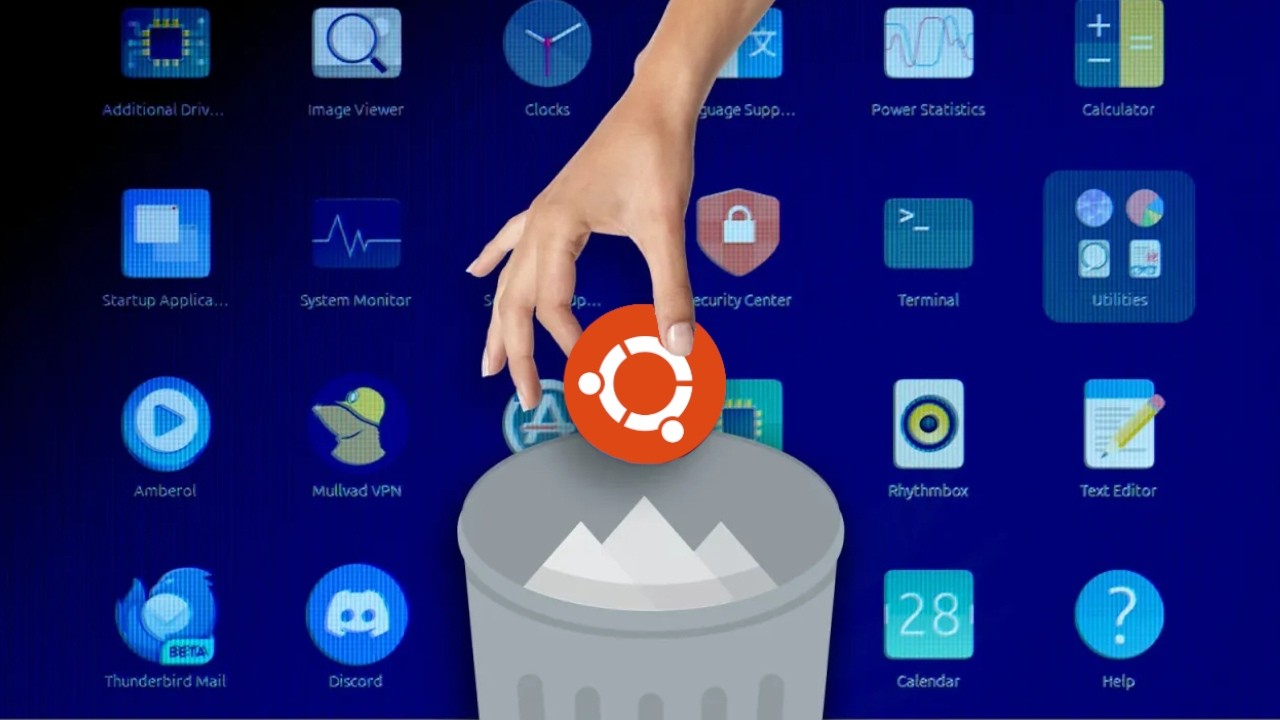


 but who knows these days… the “cover art” for the videos is AI generated, it’s easily noticeable, and I’m sure the titles too; when you make a video, you can paste the whole transcription of it into ChatGPT or Gemini and ask for a title, a description, keywords, cover art, and the AI will deliver.
 … imo)