From the outside, used to be inside, back on the outside but miss that aspect of the inside lol… Fedora is one of those projects that really leans into community involvement. Not just in theory, but in visible ways. Blog, forums, discussions, even decisions like naming, branding, and direction seem to invite input and, at times, actual voting.
I’m not saying other distros don’t do this, but Fedora feels more intentional and consistent about it across multiple channels. Am I wrong? Are others pretty much the same?
Part of me respects that a lot. It makes the project feel less top-down and more like something people can genuinely contribute to, beyond just code.
I’m curious if that’s accurate from people still closer to it, or if I’m just seeing the surface…
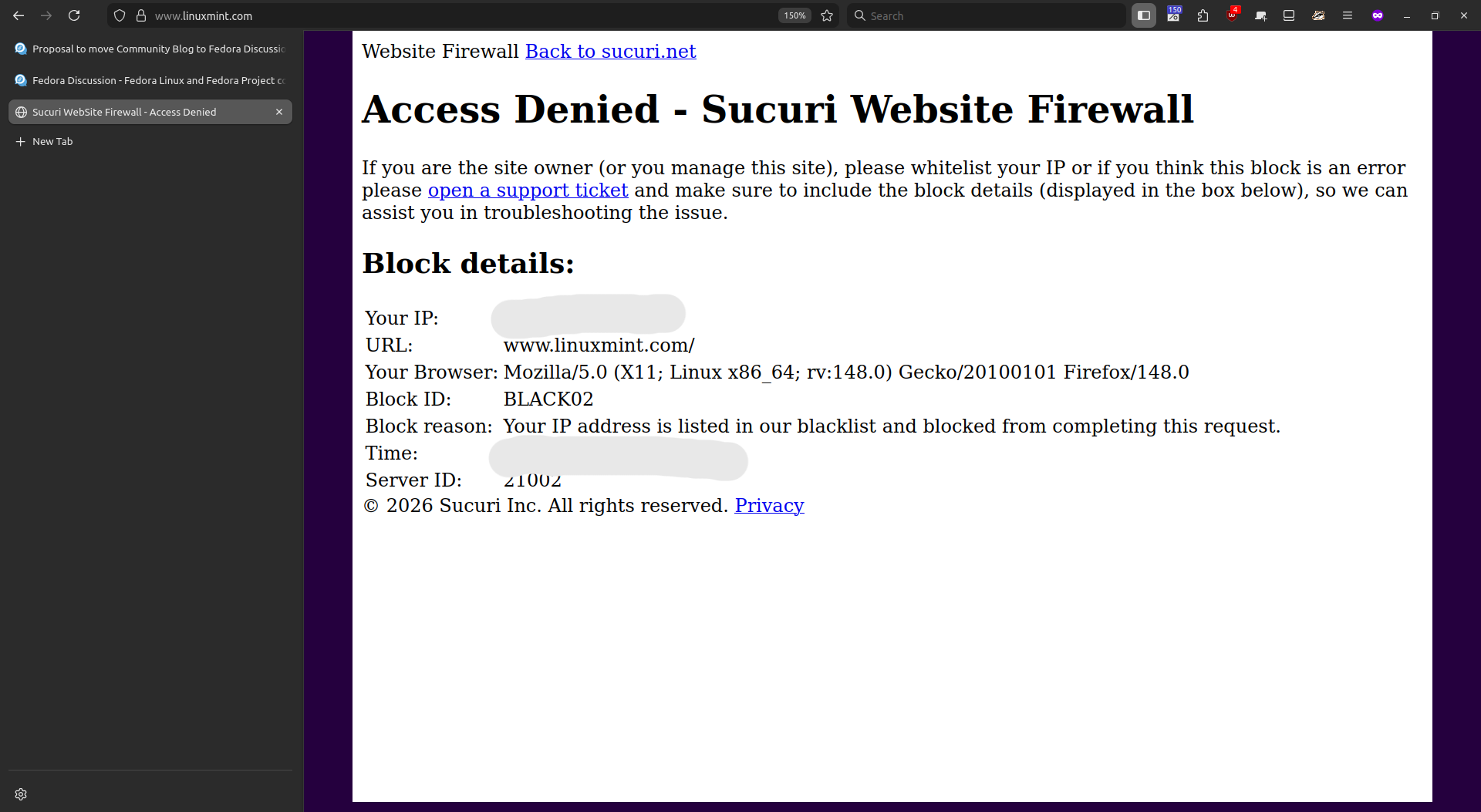
Sucuri is reacting to the exit node reputations, which get poisoned by the abusive traffic from others that also flows through it. That’s the tradeoff of using Tor.
Also worth asking, if you trust Mint enough, Tor isn’t really buying you much on their page specifically. Easy enough to open a regular browser for that one tab.
Same story with VPNs. We lean the same way for the forum, mostly to keep bots and fake accounts out. Not ideal for legitimate users, but the tradeoff tends to be worth it.
Fedora is a smart project; Red Hat is an all-in commercially oriented Linux distribution intended to make money. RHEL is Red Hat Enterprise Linux. Now what could be better for Red Hat than to produce a freely available leading edge distribution that could give them FREE testing of the work they intend to later commercialize?
Some people take great offense to that idea and avoid IBM, Red Hat, and Fedora Linux like the plague. Others find it as a fantastic way to get a hold of some of the most current code.
What I can tell you about it is that back in time, near the beginning of the project it actually FELT like you WERE debugging code for them; it would boot, but it frequently have issues.
Each Fedora release improved; in the early days, they were called “Fedora Core”. I suppose that when they started to get a bit more SOLID they DROPPED the Core part of the name.