For Arch, especially for us in the Caribbean, where IPs can show your location as Barbados one hour and Antigua the next, you can set up Arch to pick mirrors by freshness and tested speed and rotate them automatically.
Using Reflector to rewrite your mirrorlist regularly:
sudo pacman -S reflector pacman-contrib
Then for “set-it-and-forget” runs (HTTPS, recent, fastest):
sudo reflector --latest 30 --protocol https --sort rate --save /etc/pacman.d/mirrorlist
Keep it fresh weekly:
sudo systemctl enable --now reflector.timer
Reflector now pulls the official mirror status, filters current mirrors, sorts by speed, and writes /etc/pacman.d/mirrorlist.
The timer runs it for you. Arch’s docs also note it’s usually better not to filter strictly by country, which fits our Caribbean routing quirks:

Then, add a CDN-backed fallback at the very top. Edit /etc/pacman.d/mirrorlist and put this first:
Server = https://geo.mirror.pkgbuild.com/$repo/os/$arch
This is Arch’s geo-DNS CDN endpoint. It’s a solid safety net when a ranked mirror goes flaky, even if GeoIP isn’t perfect on your ISP:
Arch’s Wiki lists other methods beyond Reflector.
That said, if you prefer doing a manual refresh every now and then, you can use Arch’s official generator plus ranking and grep to filter in Miami only from USA. Something like:
curl -s "https://archlinux.org/mirrorlist/?country=US&country=BR&protocol=https&use_mirror_status=on" \
| sed -e 's/^#Server/Server/' -e '/^#/d' \
| grep -i miami \
| rankmirrors -n 10 - | sudo tee /etc/pacman.d/mirrorlist >/dev/null

sudo pacman -Syyu
If you do test that, I’ll be curious how well it works ha. But it should pull up-to-date mirrors from Miami and Brazil (tweak as needed), ranks by speed, saves the top 10, then forces a full DB refresh.
But to be honest, those Cloudflare Arch mirrors seem worth a try: https://cloudflaremirrors.com/
EDIT: On my Kali Linux install its as simple as one line in /etc/apt/sources.list:

I can check the location I’m being served from using curl (more about that List /README):
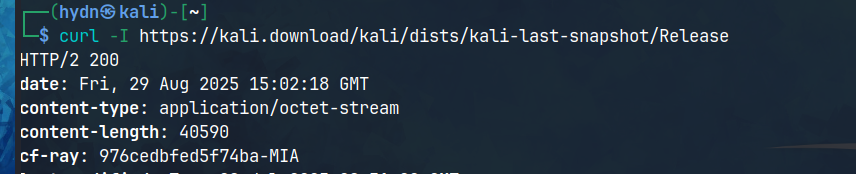
So based on the output, https://kali.download/kali is going through Kali’s geo-aware redirector (MirrorBits) and then being fronted by Cloudflare’s CDN (“cf-ray”). Cloudflare terminates in MIA (Miami) the closest major PoP to my current IP. From there, it will either serve content directly or cached by Cloudflare’s proxy edge server. So it’s always proper fast!
Kali setup is explained better than I can here. Other related reading: Cloudflare Repositories FTW