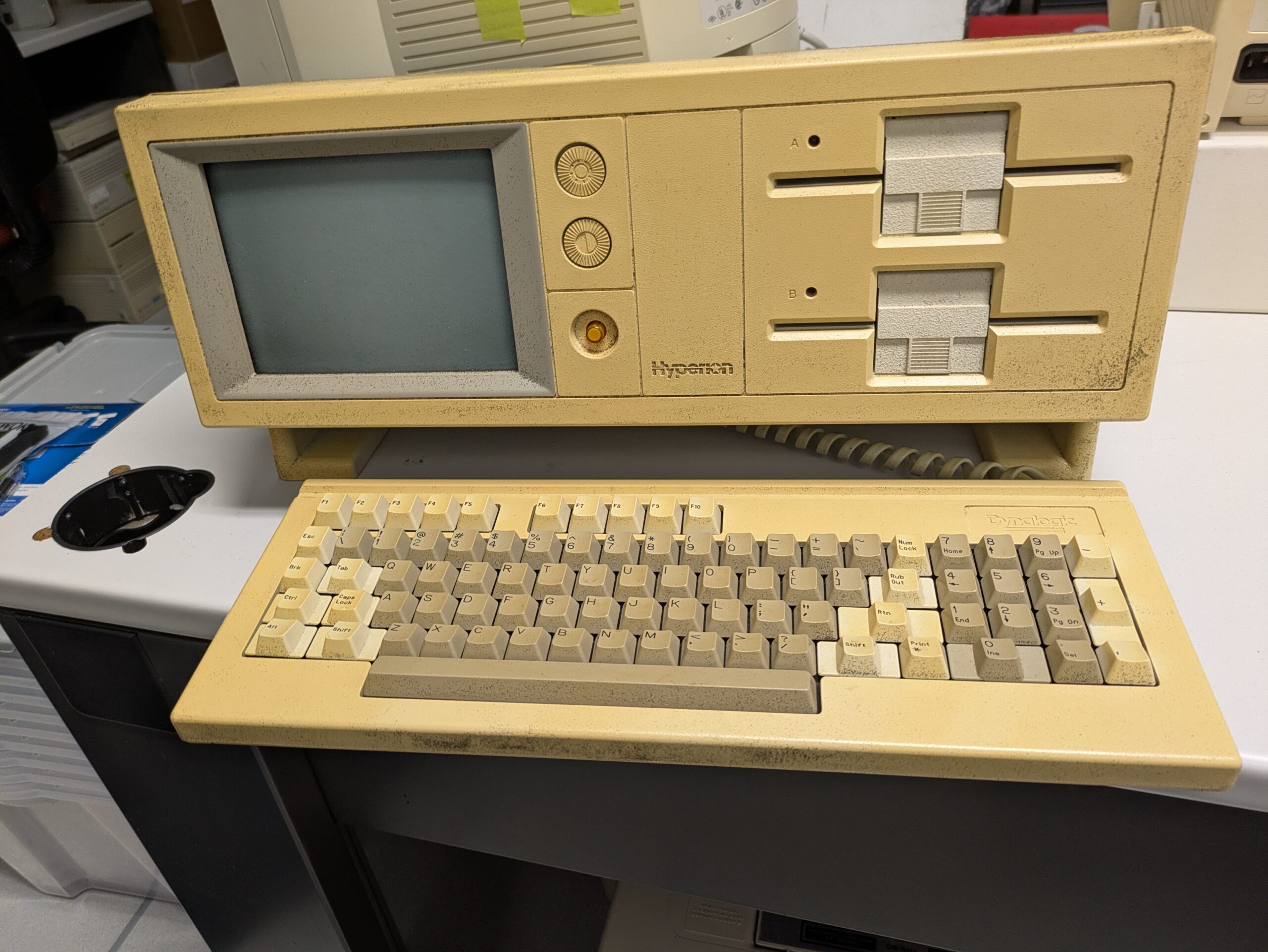
I opened the photo to see larger. I was 4 yrs old when you were booting this up.  :
:
4 Likes
That reminds me of the time I worked for a cable factory, programming in pascal under CP/M on a “portable” Philips P2000C 
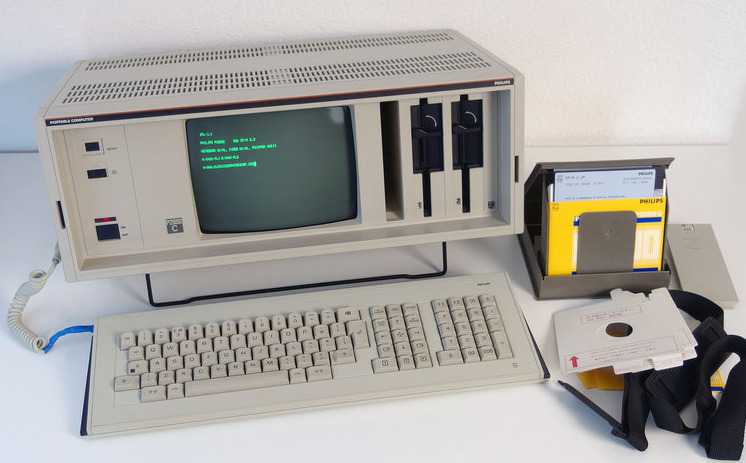
This picture is not mine b.t.w.

5 Likes
For the real conaisseurs:
I learned Pascal (when I was studying electronics) on this beast … a Prime 750 with about 30 DEC VT100 terminals connected
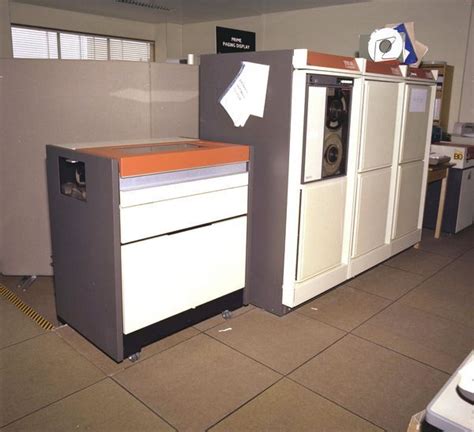
Vintage !! 
4 Likes
And the real luxury!
2 Likes
For myself, I was required to program (1975) a version of FORTRAN on the PDP-11, which was used specifically for data plotting for experimental data curve-fitting!
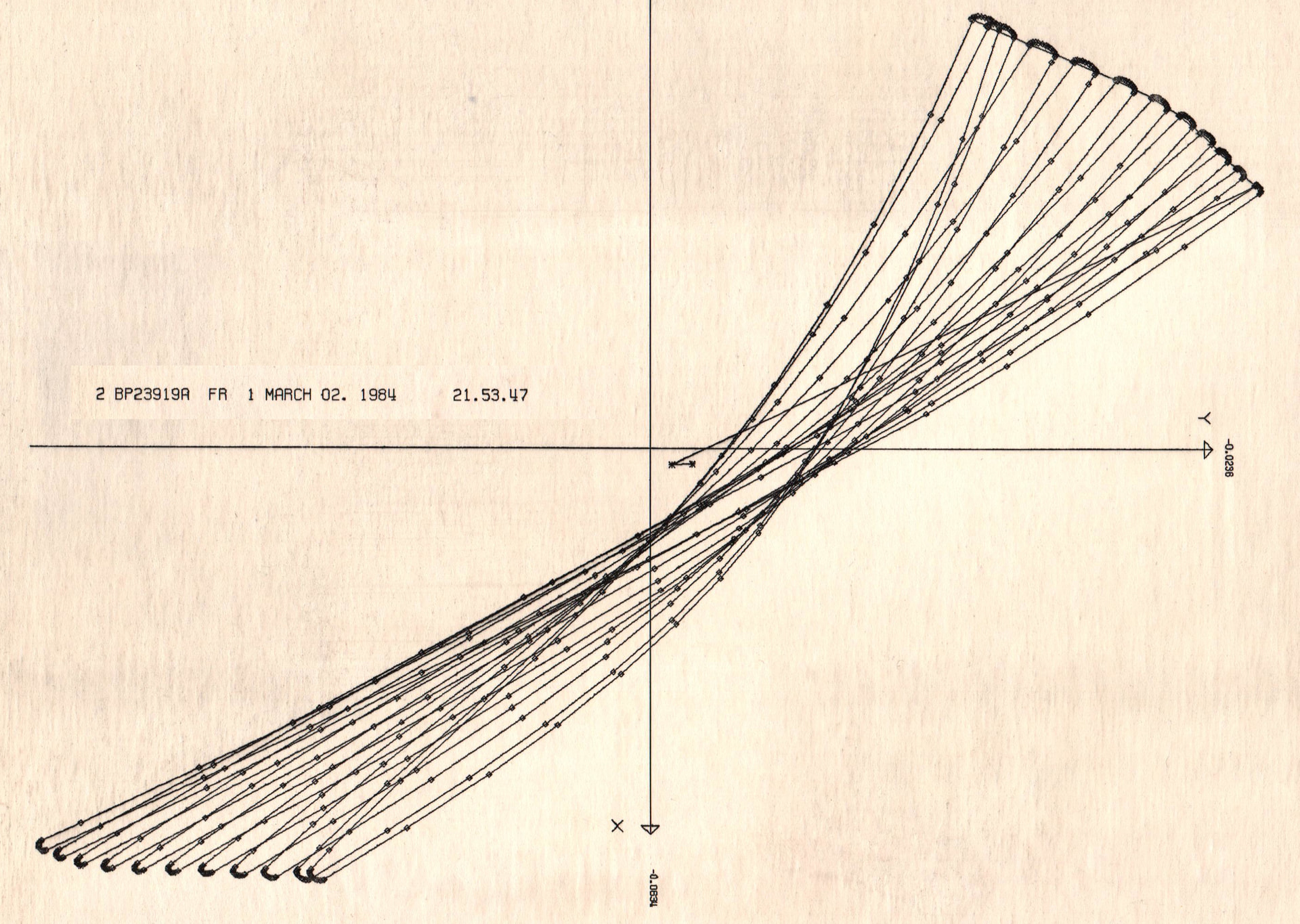
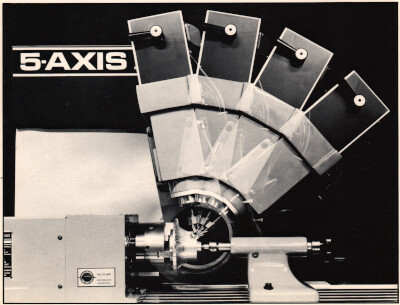
My next experience was with a Xerox raster plotter for graphics generated from 3-D programmed movements using “light-pens” on CATIA in 1983-84, (I learned IBM System/360 JCL from a book by myself to specifically write my own output CNC G-Code programs which were transmitted live over a reserved phone line to a “machine buffer” on the machine-tool about 2 city blocks away) for an experimental profile of a “blisk” at Pratt & Whitney Canada:
(plotting of sample of cutting tool paths)
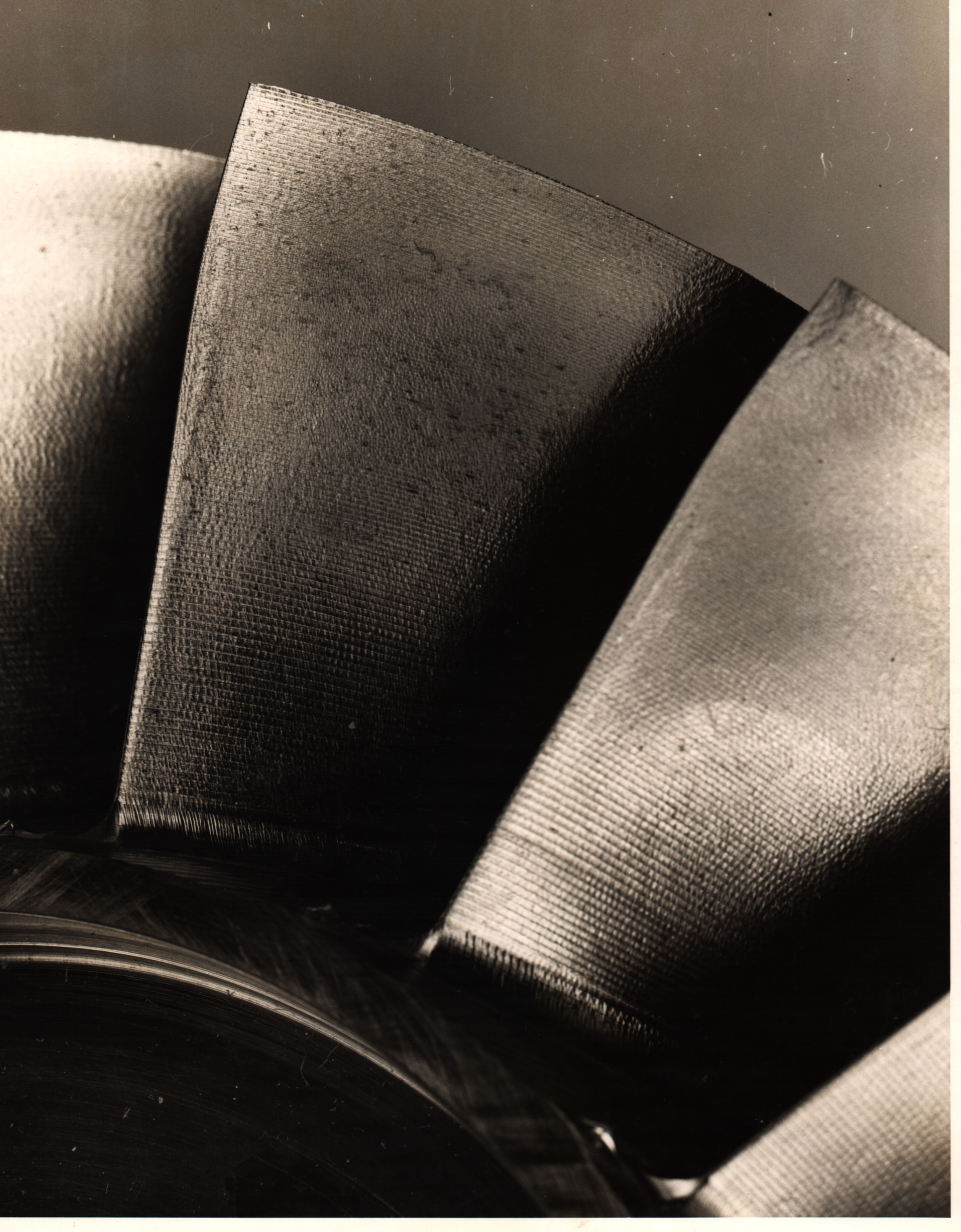
(zoomed photo of blades resulting from 5-axis CNC milling; first world-wide instance of 5-axis programming done using CATIA; custom post-processor for Boston Digital BostoMatic 5-axis Mill; cutting performed in non-stop clock-wise motion with tool tilted in direction of cutting, keeping tip in constant motion until retracted to avoid gouging of airfoil profile; about 20 minutes per individual blade, 1/4 inch tapered ball-end cutter at 8,000 RPM )
(machine structure and setup)
[Edit: BTW, that was a solid disk of titanium, before starting the cutting process.
-
Step 1: rough cut with aprox 0.2" away from final surfaces, all the blade stubs, using simple tapered ball end mill, then
-
Step 2: high-speed milling with a much smaller ball end mill cutting only on the ball.
As you can imagine, clearances were very tight and tool orientation was critical to avoid collisions between the cutter shank and adjacent blades!]
7 Likes
That is really cool!!
3 Likes
The first language I learned in high school was Dartmouth BASIC. The first scientific language I learned was FORTRAN on an IBM computer of unknown origin at a local community college. When I went to the University I had planned for my studies in Computer Science I RELEARNED Fortran the RIGHT way, using the “Elements of Programming Style” as the basis for that learning.
I believe that PL/1 was one of the next languages that I learned well; I actually used that in my first professional job. Fortunately I took the time to learn COBOL too; I was able to maintain some hourly personnel systems code in COBOL.
Another really academic language that I used, probably for the first time in my Computer Science program when I took a “Programming Languages” course was Algol; I believe I taught myself the language for the most part after it was “introduced” to me in that course. Until we got a Pascal compiler at our university, I used Fortran, PL/1 or Algol for my programming assignments.
About two years after I completed my undergraduate degree I went to New Jersey to take a course in C programming; after that, C was my language of choice; that’s what helped my entry point into UNIX systems. These days I rarely use programming languages. Most of the time I write scripts in Bash; if I need something more substantial, I usually go to Python; I don’t know it well; I usually look for an existing program to get the structure, style and syntax, then cut, copy, and paste the stuff I can use, then adapt it as needed. Perl is very powerful but the syntax can be pretty terse and challenging; Python is powerful, but it reads much cleaner than Perl in my opinion.
5 Likes
That is really cool. what a journey !
C is also my language of choice. I had a thorough education in it.
(5 days a week from 9:00 AM to 5:00 PM for 3/4 of a year).
Due to having a background in electronics ( including 6800 assembly ) the language was immediately crystal clear to me. It was the language I immediately immensely loved.
(although I’ve forgotten most about assembly by now). 
The special thing about it was that I learned C under QNX, a realtime microkernel messagepassing OS which was blisteringly fast. Even with 16 terminals on a i386 computer with only 1MB of RAM (1MB RAM was pretty expensive at that time).
Later on I got to work for that same institute where I learned C, writing an application (also under QNX) to control ISDN switchracks for teleconferencing in telecomminucation hubs. Soon I became system administrator and systemcustomizer for that same institute.
I enjoyed it very much, but after a more or less hostile takeover by another company, a lot of good collegues went elsewhere and more and more boasting suits (that couldn’t find their own backside without a map) entered the institute and i left, horryfied, in a hurry to become a soundengineer and travel with rockbands and do the odd studiojob.
For the past two decades I’ve been working in a theater (as soundengineer and applicationadministrator).
I still program in C and bash. Strangely enough, just like you, mostly Bash at the moment.
I dabbled a bit in python, and I agree with you. But I tend to run away from a language if I encounter the word ‘deprecated’ too many times.
4 Likes
Wow, I missed that as I was racing through the notes; I didn’t work with it for a really long time, but I have also worked with QNX, VxWorks, and maybe one or two other real time systems over the years. On one assignment I was testing nightly builds of real time code across not one, but two different RTOS - VxWorks was one; it was at Mercury Computer Systems around 1999.
4 Likes
So cool ! still amazing that it had a kernel of <10kB.
When they went POSIX , the kernel grew way larger… 40kB
But their synchronous IPC was unbeaten (send, receive, reply states)
3 Likes